In June 2025, Israeli and American strikes exposed the limitations of Iranian air defense systems, from the S-300 to the Bavar-373. A technical and strategic analysis.
In Summary
In June 2025, several Israeli airstrikes, supported by targeted American actions, successfully targeted Iranian strategic infrastructures despite the presence of highly regarded air defense systems, notably the Russian S-300 and the Iranian Bavar-373. Touted by Tehran as superior to the American Patriot, the Bavar-373 was supposed to guarantee the sanctity of Iranian territory. However, interceptions proved to be partial, with missiles and drones penetrating supposedly impenetrable defensive bubbles. This incident sparked controversy regarding the reliability of “Made in Iran” equipment and the actual integration of sensors, radars, and command centers. Beyond official communication, the conflict revealed structural limitations, including incomplete radar coverage, saturation, vulnerability to electronic warfare, and insufficient multi-layer coordination. The impact extends beyond the military realm, affecting Iran’s industrial credibility and regional deterrence doctrine.
The Context of a Limited Yet Revealing Aerial Confrontation
The June 2025 conflict did not escalate into an extended open war but consisted of a series of air and missile strikes targeting Iranian military and industrial infrastructures linked to its ballistic program and regional capabilities. According to estimates from Western and Middle Eastern analysts, several dozen vectors were engaged within a few days, combining cruise missiles, long-endurance drones, and precision-guided munitions.
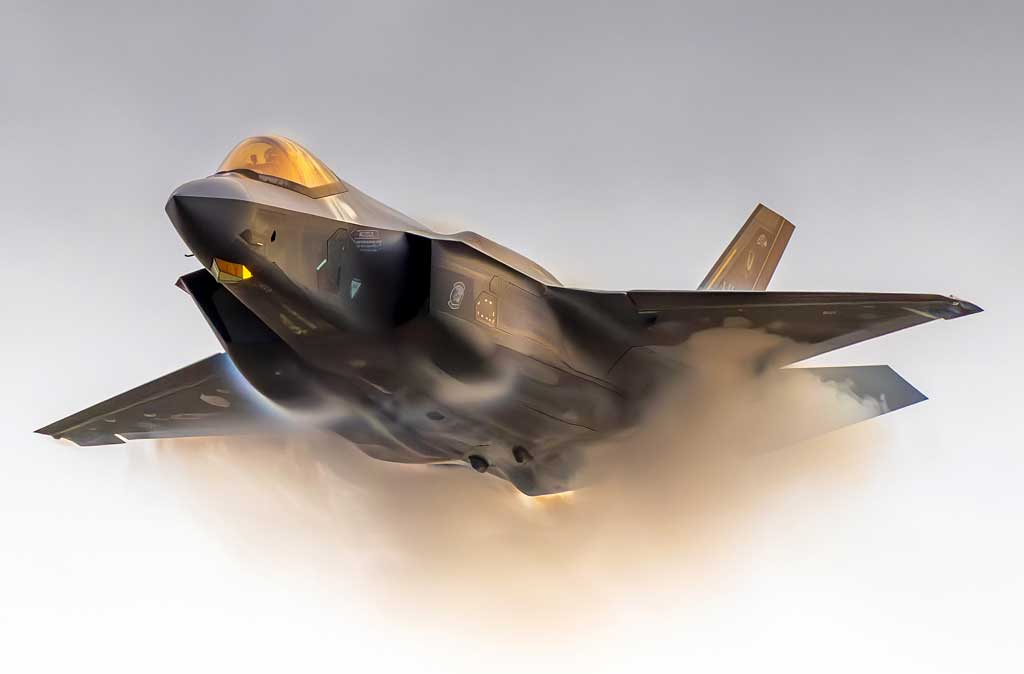
Israel operates a fleet of about 39 F-35I Adir, 75 F-16I, and 25 F-15I, capable of carrying penetration munitions such as GBU-31 or Spice 1000. Since 2018, the Israeli Air Force has demonstrated its capability to strike deep in Syria despite the presence of S-300 batteries. In June 2025, however, the goal was different: to test and neutralize segments of the Iranian air defense itself.
American actions complemented the operation, particularly through cruise missile strikes launched from naval platforms in the Gulf of Oman and the Gulf. The Tomahawk Block IV has a range exceeding 1,600 kilometers and a very low-altitude flight profile designed to evade long-range radars.
The observable result is clear: several targets were hit. Commercial satellite images revealed impacts on radar installations and sensitive industrial sites.
The Promise of a Shield: The S-300 and the Bavar-373
Iran built its strategy for the sanctuary of Iranian territory on a multi-layered architecture, combining imported Russian systems and national developments.
The S-300PMU-2 Favorit, delivered by Russia starting in 2016, is theoretically capable of intercepting targets at distances of up to 200 kilometers and altitudes between 10 meters and 27 kilometers. Its 64N6E2 radar can track up to 100 targets and engage 12 simultaneously.
Unveiled in 2019, the Bavar-373 is presented by Tehran as being equivalent to or even superior to the S-300 and the Patriot PAC-3. It reportedly utilizes the Sayyad-4 missile, claiming a range of 200 kilometers and a ceiling above 27 kilometers. Iranian authorities assert that it can detect stealthy targets at distances greater than 300 kilometers.
On paper, this combination offers strategic coverage. In practice, the performance of a system depends on its network integration, the quality of its radars, crew training, and its resilience to electronic warfare.
The Operational Reality Observed in June 2025
The Israeli strikes revealed a limited interception rate. Regional sources estimate that a significant proportion of engaged vectors reached their targets. The exact figure remains classified, but the damage observed at several sites indicates successful penetrations through defensive bubbles.
Several technical factors can explain the relative failure of the Iranian air defenses.
First, saturation. Even a high-performing system has a limited number of engagement channels. If a battery can engage 12 targets simultaneously, a salvo combining cruise missiles, drones, and decoys can quickly exceed this capacity.
Next, electronic warfare. Israeli F-35Is are equipped with advanced jamming and data fusion systems. Their reduced radar signature complicates long-distance detection. Cruise missiles flying at an altitude of 30 meters exploit the curvature of the earth to evade long-range radars.
Finally, radar coverage. Iran is vast, with over 1.6 million square kilometers. Ensuring comprehensive coverage requires a dense network of three-dimensional radars and interconnected command centers. The initial strikes targeted fixed radars, weakening overall coordination.
The Controversy Surrounding the Bavar-373
The Iranian narrative has long portrayed the Bavar-373 as a symbol of technological autonomy, with claims that it surpasses the American Patriot feeding a strategic narrative.
The June 2025 sequence has undermined this image. Had the system intercepted the majority of missiles and drones, the damage would have been minimal. However, key infrastructures were impacted.
It is essential to nuance this discussion. No system is infallible. Even the Patriot PAC-3, operational in several Gulf states, has shown limitations against massive salvos of drones and missiles launched by Houthis in Saudi Arabia between 2019 and 2022. The question at hand is not whether there is a total lack of impact, but the level of resilience.
In the Iranian case, the controversy revolves around the discrepancy between the advertised promise and the observed performance. Analysts point to a probable integration deficit between sensors, batteries, and centralized command.
The Strategic Impact on Iranian Doctrine
Iran has structured its deterrence posture on three pillars: ballistic missiles, regional allied networks, and air defense. The demonstration of vulnerability in June 2025 affects the third pillar.
The ability of an adversary to penetrate the airspace raises questions about the credibility of the sanctuarization strategy. It compels Tehran to reevaluate its architecture, which might involve strengthening mobile systems, multiplying passive radars, and increasing investment in defensive electronic warfare.
Industrially, the reputation of “Made in Iran” is tarnished. Countries interested in Iranian systems may reconsider their purchases. Export credibility heavily relies on performance in real-world conditions.
The Demonstration Following American and Israeli Strikes
The combined strikes constituted a technological demonstration. They illustrated that a force equipped with stealth capability, long-range cruise missiles, and advanced electronic warfare can penetrate an integrated defense system if it is not perfectly coordinated.
Post-strike satellite images revealed destroyed or damaged radars. The neutralization of a strategic radar can create a breach of several hundred kilometers in terms of effective coverage.
This demonstration does not imply that Iran is defenseless. It indicates that its defense is not impermeable. In an extended conflict, Iran would retain significant ballistic retaliation capabilities. However, the protection of its critical infrastructures appears less robust than advertised.
The Technological and Industrial Lesson
The events of June 2025 underscore a simple truth: modern air defense relies on network integration. Isolated systems, even high performing, are vulnerable.
States investing in air defense are now seeking multi-layered architectures combining active and passive radars, long-range and short-range interceptors, anti-drone systems, and electronic warfare capabilities. Iran will need to accelerate its efforts in these areas if it aims to restore the credibility of its shield.
The conflict also has a regional effect. Gulf countries are watching closely. The comparison between Russian, Iranian, and Western systems influences acquisition choices.
The June 2025 episode did not destroy Iranian air defenses; it illuminated their limitations. The central question is no longer whether the S-300 or the Bavar-373 can intercept an isolated missile. It revolves around their performance against a coordinated, saturating, and technologically advanced attack. This is where the strategic credibility of Tehran is now at stake.