A €20,000 drone can compel the use of a €2 million missile. Analyzing attrition warfare and the cost-interception ratio in the economy of war.
In Summary
Contemporary warfare is no longer solely defined by the technical performance of a fighter jet or the range of a missile. It also plays out in public finances. The conflict in Ukraine, drone attacks in the Middle East, and missile defense in Israel have revealed a brutal equation: a €20,000 drone can force an adversary to launch a €2 million interceptor. This cost-interception ratio has become central to military strategy. It shapes budgets, industries, and doctrines. The goal is no longer merely to shoot down a target, but to do so at a sustainable cost over time. Attrition warfare takes on an economic dimension as agile states bet on saturating defenses and mass production. Technological powers must rethink their arsenals to avoid “economic death.” The question now is not who has the most sophisticated weapon but who can remain financially viable.
Shifting the Debate Toward the Economy of War
For decades, military comparisons focused on the maximum speed of a fighter, the range of a radar, or the precision of a missile. This framework has become inadequate. The current reality demands a different lens: that of war-nomics, the economics of warfare.
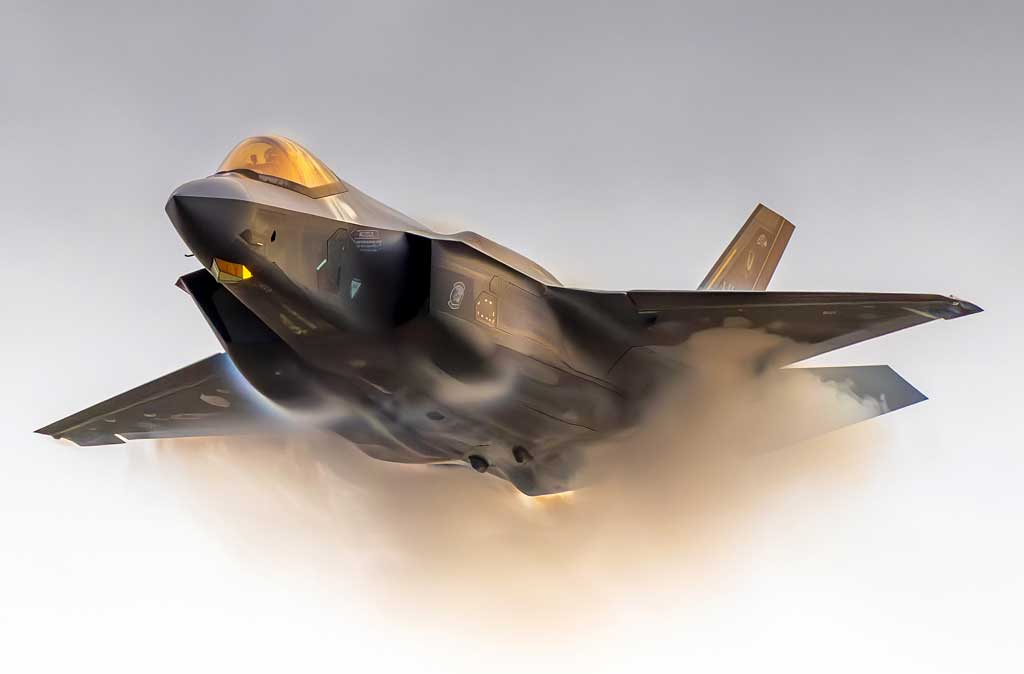
A F-35 costs around €80 to €100 million to purchase. Its hourly flight cost exceeds €30,000. A Patriot PAC-3 MSE missile is estimated at between $3 and $4 million per unit, roughly translating to €2.7 to €3.6 million depending on the exchange rate. In contrast, a Shahed-136 drone, used by Russia in Ukraine, is valued at between €20,000 and €40,000 according to Western estimates.
The differential is staggering. If a defense system fires a €3 million missile to neutralize a €20,000 drone, the cost per target becomes disproportionate. The ratio can reach 150 to 1. On a large scale, this imbalance drains stocks and budgets.
Therefore, the strategic question changes fundamentally. It is no longer just about intercepting. It is about intercepting without financial ruin.
The Mechanics of the Cost-Interception Ratio
The cost-interception ratio compares the price of an offensive vector to the price of its neutralizer. When the interceptor is much more expensive than the threat, defense loses its economic advantage.
Take a concrete example. In Ukraine, several waves of Russian drones and missiles have targeted energy infrastructures. Ukraine has received Patriot and IRIS-T SLM batteries. The IRIS-T missile costs approximately €400,000 to €500,000. The cost of the Patriot exceeds this amount significantly.
If 50 drones at €30,000 each are launched, the attacker spends about €1.5 million. If the defense responds with 50 interceptors at €500,000, it incurs a cost of €25 million. The ratio is 1 to 16. Over several months, this dynamic weighs heavily on finances.
This mechanism is even more pronounced when the defense must engage multiple missiles to ensure interception. The probability of interception is never 100%. Doctrines sometimes anticipate two shots per target. The cost doubles.
The direct consequence is that saturating defenses becomes a rational strategy. Multiplying inexpensive targets forces the adversary to consume rare and costly ammunition.
Saturation of Defenses as the Strategy of the Underdog
Saturation of defenses is rooted in volume. It seeks not technological perfection but abundance. It is the budgetary version of David versus Goliath.
In September 2019, the attack on the Saudi facilities at Abqaiq and Khurais combined drones and cruise missiles. The Patriot systems did not intercept all threats. This event demonstrated that relatively inexpensive vectors could disrupt a major strategic infrastructure.
In Israel, defense relies on a multi-layered architecture: Iron Dome, David’s Sling, Arrow. The cost of an Iron Dome interceptor is estimated at around $40,000 to $50,000. This is already closer to the cost of a rudimentary drone, but still more than some homemade projectiles.
The logic is relentless. If an actor launches 1,000 drones at €20,000 apiece, the investment is €20 million. For defense, even at €50,000 per interceptor, the bill reaches €50 million. In the long run, this attrition warfare wears down stocks.
Outsiders exploit this financial asymmetry. They do not need air superiority. They seek economic exhaustion.
The Enduring Role of Fighter Jets
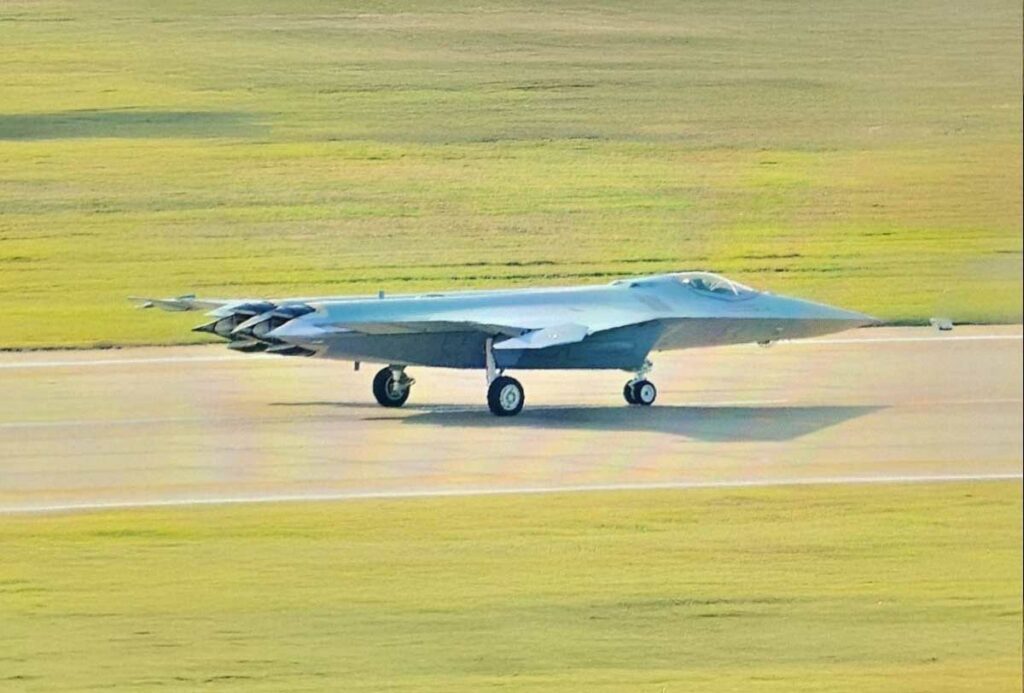
Should we then abandon fighter jets in favor of drones and missiles? The answer is no. The fighter jet retains unique advantages: flexibility, responsiveness, deterrence capability, and deep-strike capabilities.
A Rafale or an F-15 can engage multiple targets on a single sortie. It can adapt its mission mid-flight. It can deter adversaries merely by its presence.
However, economics necessitates reflection. A modern air-to-air missile like the AMRAAM costs around €1 million. Using it against a rudimentary drone raises proportionality issues.
Aerial forces are therefore investing in hybrid solutions: automatic cannons, less expensive short-range missiles, electronic jamming, and directed energy weapons. The 50 to 100-kilowatt lasers tested by the United States aim to precisely reduce the cost per shot. Once the infrastructure is in place, the marginal cost of a laser shot is just a few euros in electricity.
The goal is clear: to rebalance the economic ratio.
National Budgets Facing the Equation
The United States allocated approximately $886 billion to defense in 2024. Israel spends around 5% of its GDP on defense. Ukraine heavily relies on Western aid to finance its air defense systems.
Even for major powers, stocks are not infinite. The United States has acknowledged that the annual production of Patriot missiles needs to be increased. In 2022, the production rate was about 500 to 600 missiles per year. A high-intensity war can consume several hundred in just a few weeks.
Industry must keep pace. Producing a sophisticated interceptor demands advanced electronic components, solid propellants, and a complex supply chain. In contrast, producing a simple drone requires civilian engines, commercial circuits, and a lighter logistics burden.
This industrial difference accentuates financial asymmetry.
Agility as the New Superiority
The most agile countries combine mass production with rapid innovation. Turkey, with its Bayraktar drones, has demonstrated that a relatively affordable system can alter a local balance of power. Iran has industrialized the production of low-cost drones. Russia has adapted its supply chains to incorporate components available on the civilian market.
Agility also means diversifying responses. Instead of systematically deploying costly missiles, some armies utilize short-range anti-drone systems, jammers, and guided machine guns.
The best allocation of resources between drones, missiles, and fighter jets rests on a simple principle: use the tool proportionate to the threat. Firing a €3 million interceptor at a homemade drone is a tactical victory but a strategic defeat.
The Industrial and Strategic Consequences
The financial asymmetry alters industrial priorities. Budgets shift towards less expensive, more numerous, and adaptable systems. Industries invest in the mass production of inexpensive munitions.
Strategy evolves. Doctrines now incorporate the notion of cost per target into planning. Military staffs evaluate not only the probability of interception but also financial sustainability over several months.
This shift favors modular solutions. An effective defense system must combine long-range interceptors for ballistic missiles, medium-range systems for cruise missiles, and very short-range solutions for drones.
The balance is delicate. Over-investing in high-tech exposes one to budget exhaustion. Over-favoring low-cost reduces the ability to counter sophisticated threats.
The Challenge of Avoiding Economic Death
“Economic death” occurs when defending a territory costs more than the damages it prevents. If protecting a power plant requires firing interceptors whose costs exceed the strategic value of the target, the equation becomes absurd.
States must therefore prioritize. Not all targets warrant a multi-million-euro interceptor. Prioritization becomes a strategic act.
Modern warfare imposes budgetary discipline. It rewards those who combine technological innovation, mass production, and economic rationality. The battlefield is no longer merely aerial or terrestrial. It is also financial.
€20,000 drones have upended military hierarchies. They remind us that power is not only measured in tons of thrust or kilometers of range. It is also measured by the ability to endure. And in this budgetary attrition warfare, superiority often belongs to those who can spend less to achieve more.