The joint offensive by the USA and Israel against Iran combines Tomahawk missiles, suicide drones, F-35 fighters, and massive airstrikes. Here are the weapons, targets, and initial effects.
In Summary
As of March 1, 2026, we must refer to a joint offensive between the United States and Israel on a large scale, rather than merely a raid. The operation began on February 28. Washington has officially named its involvement Operation Epic Fury. The initial confirmed reports indicate a rare combination of cruise missiles, low-cost suicide drones, stealth aircraft, and extensive Israeli airstrikes. The stated objectives extend well beyond a mere political signal: to neutralize command sites, air defense systems, missile and drone launchers, military airfields, and to prevent Iran from pursuing a military nuclear trajectory. The immediate results have already been significant: Iran has lost parts of its command chain, military infrastructures have been damaged, and Tehran has retaliated with missile and drone salvos against Israel and U.S. installations in the Gulf. However, it is important to clarify that the precise military toll is still evolving, and the strategic outcome is far from stabilized.
The Nature of the Joint Offensive
The attack launched on February 28, 2026, is a coordinated operation between the United States and Israel. Both capitals acknowledge it as a major strike, prepared in advance, and not as an improvised reaction. According to public information, the campaign targets command centers, air defense capabilities, missile and drone launch sites, and military airfields. U.S. President Donald Trump has described the operation as a means to destroy Iranian military capabilities and prevent the emergence of a military nuclear capacity. From the Israeli perspective, the rationale is framed as a preemptive strike against what is portrayed as an existential threat.
This point is crucial: the operation is not solely anti-missile. It also represents a decapitation strike, attempting to disrupt the enemy’s decision-making chain. Reuters reports that the attack targeted the Iranian power hierarchy, and the death of Ali Khamenei was subsequently confirmed by Iranian state media. Other high-ranking military officials have also been reported among the deceased. This alters the nature of the campaign: it no longer solely concerns the destruction of infrastructure but involves direct neutralization of the political and military center of the regime.
The American Weapons that Initiated the Strike
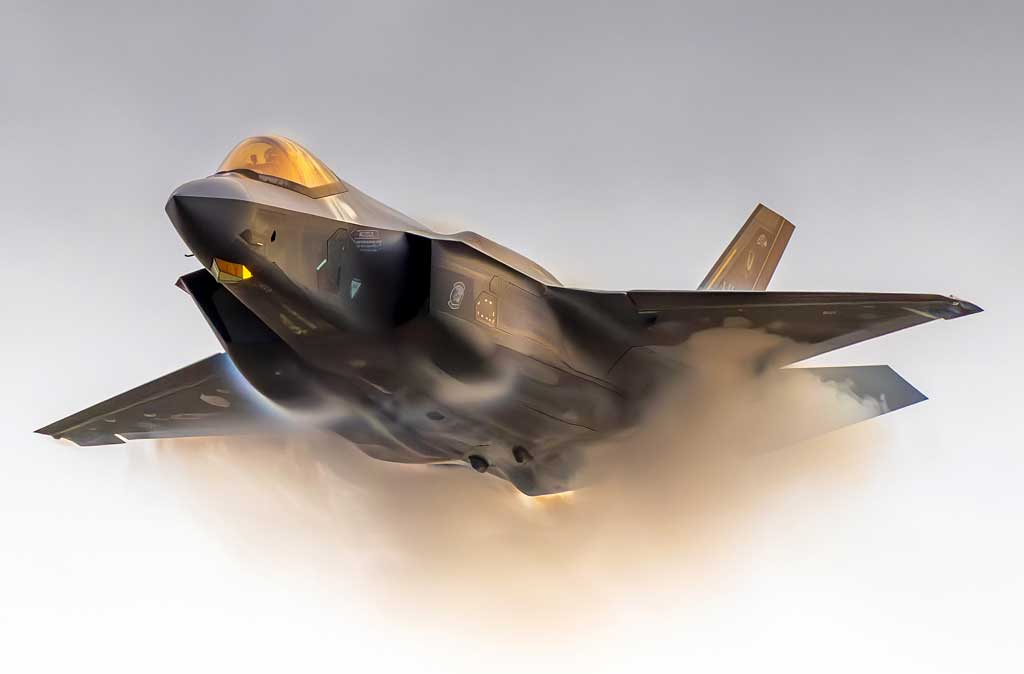
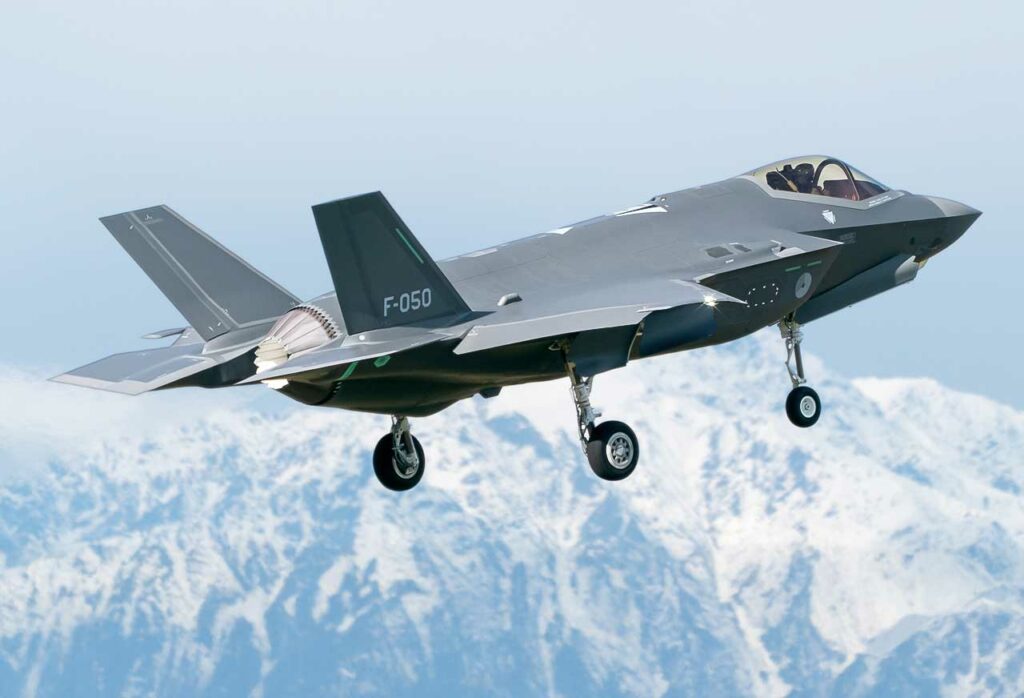
The weapons used by the U.S. against Iran are currently better documented publicly than those deployed by Israel. Reuters and visuals released by U.S. Central Command confirm the use of Tomahawk missiles, F-35 jets, F/A-18 aircraft, and, for the first time in combat, low-cost suicide drones known as LUCAS. Specialized media have also reported the use of ATACMS and F-15 aircraft in the American deployment. In other words, Washington has combined naval strikes, manned airstrikes, drone saturation, and long-range ground-to-ground fire. This is not a mere symbolic show of force; it represents a complete strike architecture.
The Tomahawk as a Deep Strike Weapon
The Tomahawk Land Attack Missile remains the classic tool for the U.S. initial salvo. It is a precision cruise missile, launched from the sea or terrestrial platforms, designed to hit fixed targets at long distances. Reuters notes a range of about 1,600 kilometers (1,000 miles), a length of 6.1 meters (20 feet), a weight of approximately 1,510 kilograms (3,330 pounds), and an average cost close to $1.3 million per unit. Technically, it is the ideal weapon for early strikes against hardened sites, command centers, radars, or critical infrastructures, without immediately exposing aircraft over the most heavily defended areas.
In an offensive against Iran, the Tomahawk mainly serves to breach defenses. It does not “win” the air battle on its own. Instead, it disrupts the initial layers of the opposing system. It allows for simultaneous strikes on multiple sensitive points from a long distance, with a known, robust operational signature compatible with strikes launched from destroyers or other naval platforms already positioned in the region. It serves as the opening hammer, not the finishing tool.
The LUCAS as a Low-Cost Saturation Weapon
The most striking novelty comes elsewhere. For the first time in combat, the U.S. has deployed LUCAS (Low-Cost Unmanned Combat Attack System) suicide drones, described as somewhat akin to Iranian Shaheds in their operational logic. Reuters indicates a cost of about $35,000 per unit. This figure is significant: it illustrates the logic of affordable mass that is now gaining traction within U.S. forces. We are no longer using only expensive cruise missiles against every secondary target. We are now deploying much cheaper vectors to saturate, draw fire, and strike radars, mobile launchers, or opportunistic targets.
The strategic signal is stark. Washington is adopting part of its adversaries’ military grammar. Iran popularized the use of low-cost drones to wear down defenses. The U.S. is now embracing this logic but with better integration of sensors, air support, and cruise missiles. In other words, America is no longer responding solely with sophistication; it is also responding with volume.
Combat Aircraft as Tools for Penetration and Suppression
Images and data released by the U.S. military show the engagement of F-35 and F/A-18 aircraft, while Aviation Week adds F-15 jets. The roles of these aircraft align with the mission profile: penetration, suppression of air defenses, precision strikes, escort coverage, and targeting of mobile threats. The F-35, with its stealth and sensor fusion, is particularly suited for detecting radar emitters, designating targets, and striking in a dense environment. The F/A-18, more versatile and less stealthy but highly proven, adds payload capacity and flexibility. If the F-15 has indeed been deployed as reported by Aviation Week, it brings additional payload and range.
The key point is this: missiles create the opening, but aircraft execute the tactical kill. They exploit gaps created in the opposing defense, targeting still-active batteries, undestroyed launchers, reconstituted sites, or aircraft on the ground. This is where the campaign gains depth.
The Israeli Weapons Confirmed and Areas of Uncertainty
Regarding the weapons used by Israel against Iran, the volume is known, but the detailed nomenclature is less so. Reuters reports that Israel has deployed approximately 200 combat aircraft and struck 500 targets in the largest air mission in its history. Aviation Week adds that Israel claims to have launched over 1,200 munitions on the first day. However, as of this writing, there is still no publicly available comprehensive inventory, target by target, missile by missile, published uniformly by the IDF in accessible open sources. Thus, it is necessary to distinguish what is confirmed from what remains probable but undocumented.
What is confirmed, however, is the nature of the targets: air defenses, missile launchers, command centers, and a gradual expansion of the campaign towards Tehran. From this point, a serious technical reading leads to a cautious conclusion: such a deep and massive raid likely involves a mix of precision-guided bombs and stand-off munitions launched from outside the densest defense bubble. But this remains, at this stage, an analytical inference, not a detailed official list of munitions published. To say more would be to embellish the facts.
The Objectives Behind the Weapons
The attack must be interpreted in three layers. The first is military: to break the eyes and arms of Iran. The eyes represent the radars, air defenses, and command centers. The arms include missile ramps, drones, airfields, and forces capable of quick retaliation. The Associated Press explicitly cites the command facilities of the Revolutionary Guards, air defense capabilities, missile and drone launch sites, as well as military airfields among the targets.
The second layer is political: the strike also aims to disrupt the regime’s leadership. Targeting areas close to the Supreme Leader’s offices is unambiguous. It attempts to sever central command. Trump, for his part, subsequently delivered a speech extending beyond just the nuclear issue, calling on Iranians to overthrow their government. It must be clear: from that point onward, we are not merely in the realm of military neutralization. We are touching upon the realm of regime change explicitly articulated in American rhetoric.
The third layer is doctrinal. This offensive exemplifies the combination of expensive and inexpensive weapons within a single architecture. On one hand, there are Tomahawks and stealth aircraft for precision, penetration, and strategic targets. On the other hand, there are low-cost suicide drones for saturation and attrition. It is a war of very high technology, but no longer solely a war of very high technology. It is the convergence of stealth and volume.
The Tactical Results Already Visible
The initial results are spectacular, but they must be interpreted with caution. The most significant is political and symbolic: Reuters reports that Ali Khamenei was killed, and this death was subsequently confirmed by Iranian state media. Reuters also mentions the deaths of other high-ranking officials, including the Iranian Minister of Defense and the head of the Revolutionary Guards, according to multiple sources. If these losses are confirmed durably, Iran has faced an immediate disorganization of its political-military leadership.
From a strictly military standpoint, Israel claims to have struck 500 targets and the attack targeted defense systems already weakened in previous confrontations. The Associated Press indicates that, twelve hours after the fighting began, the United States reported no human losses on the American side and only limited damage to their bases despite hundreds of missiles and drones launched by Iran in retaliation. This indicates that the first offensive wave achieved some of its immediate goals: striking hard, surviving the initial counterattack, and maintaining the capacity for escalation for future actions. However, this does not prove that all Iranian capabilities have been neutralized.
The Immediate Limits of “Precision”
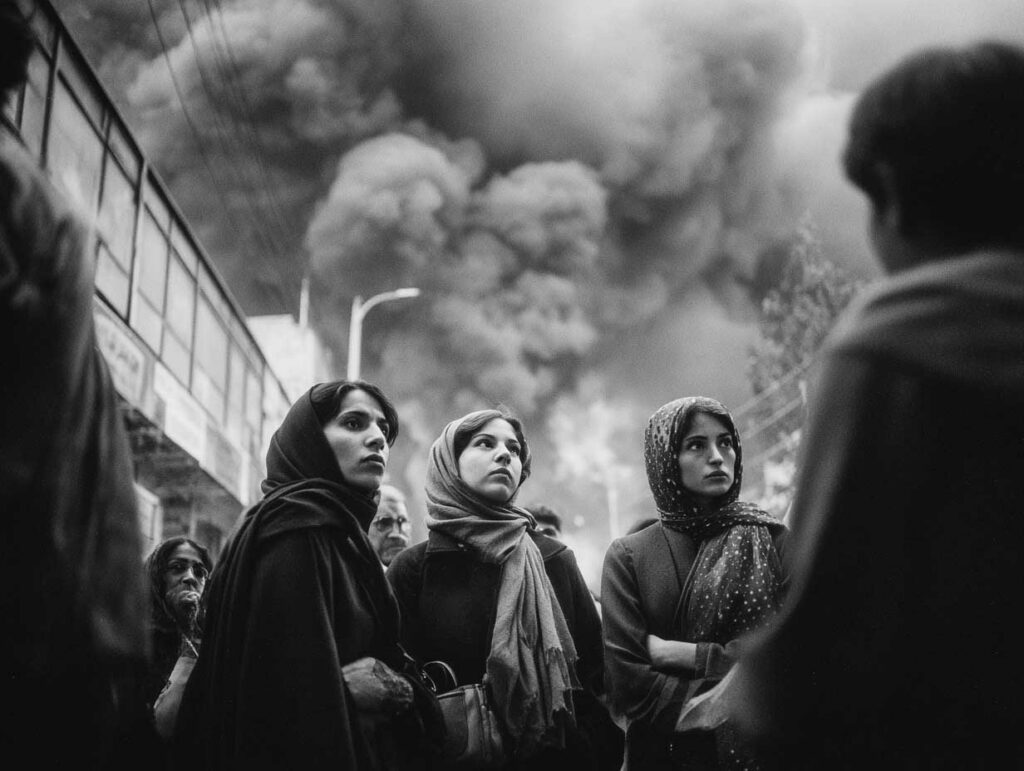
We must also consider the other side. The strikes have caused an immediate human toll in Iran. The Associated Press, citing Iranian state media and the Red Crescent, reports at least 201 deaths and over 700 injuries in the first toll released on February 28. AP also mentions reports of civilian casualties, including a strike that hit a girls’ school in the south. This highlights a basic reality: even when a campaign is marketed as “surgical,” an offensive of this scale, conducted against dispersed targets and integrated into dense territory, almost always produces collateral damage and gray areas.
The other limitation is strategic. Iran has retaliated against Israel, but also against U.S. installations in Bahrain, Kuwait, and Qatar, according to AP, and Reuters reports broader strikes in the Gulf. This means that the campaign has not crushed Tehran’s initial retaliation capacity. It has undoubtedly diminished it, but it has not eliminated it outright. This is a major distinction.
The True Reading of This Arsenal
The arsenal employed by the United States and Israel against Iran reflects a broader evolution in modern warfare. The first lesson is that combined strikes are becoming central once again: cruise missiles, suicide drones, stealth aircraft, multirole fighters, surface-to-surface fires, and Israeli air mass within a single sequence. The second lesson is that unit cost is no longer the only criterion. The Pentagon is now willing to deploy vectors costing $35,000 alongside missiles costing $1.3 million and aircraft valued at tens of millions. The third lesson is political: when an operation targets not only launchers and radars but also airfields and the regime’s leadership, it is no longer just a message. It represents an attempt to reshape the regional balance of power through force.
The focus to watch now is not just the number of targets hit. It is the real capacity of Iran to reconstitute its command chains, to maintain a volume of retaliation, and to preserve its critical programs despite the initial destruction. A strike can be tactically brilliant but strategically incomplete. This is often where the future is determined.
Sources
Reuters, US Deploys Suicide Drones and Tomahawk Missiles in Iran Strikes, March 1, 2026.
Reuters, Iranian Leader Khamenei Killed in Air Strikes as U.S., Israel Launch Attacks, February 28, 2026.
Associated Press, What to Know About U.S.-Israel Attacks on Iran, February 28, 2026.
Aviation Week, Israel Strikes Tehran As ‘Operation Epic Fury’ With U.S. Enters Day 2, March 1, 2026.
Associated Press, U.S. and Israel Clash with Iran at Emergency Security Council Meeting, March 1, 2026.
Avion-Chasse.fr is an independent news site.