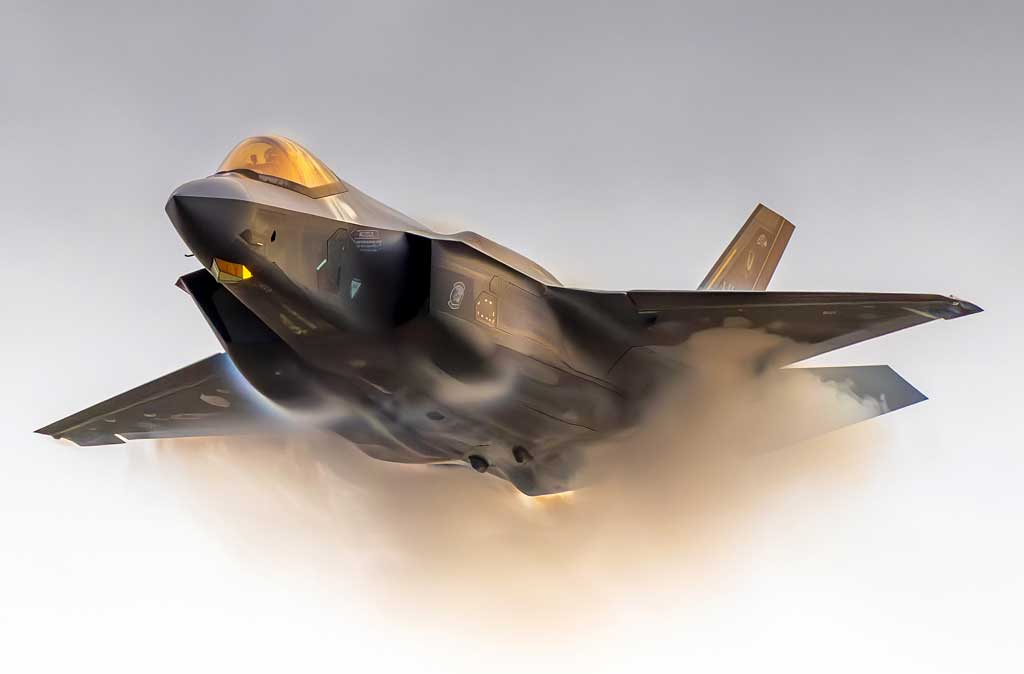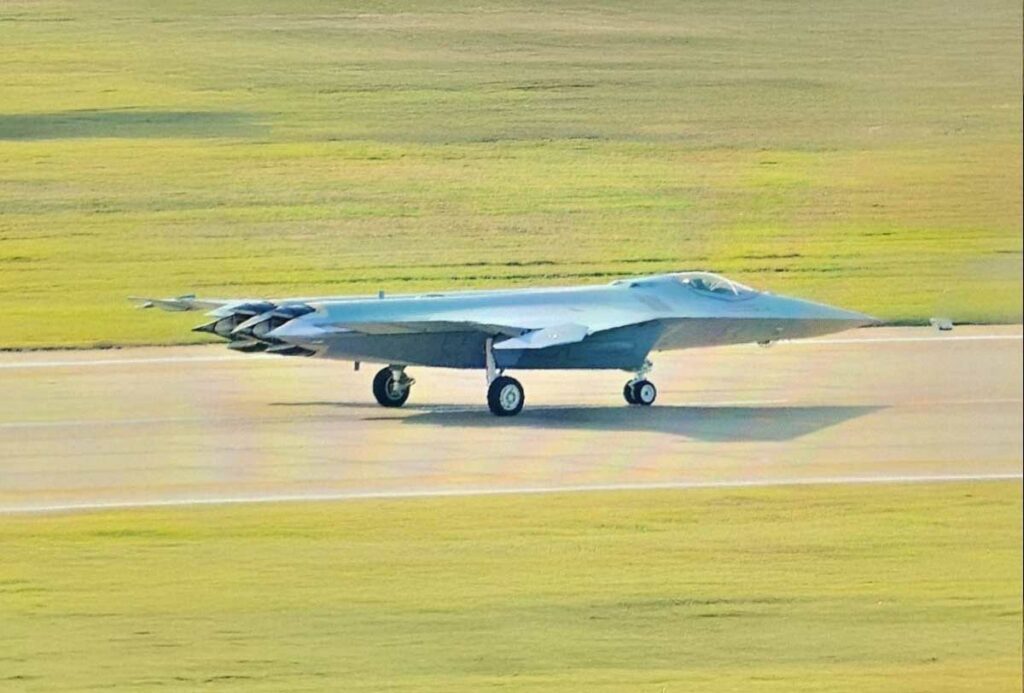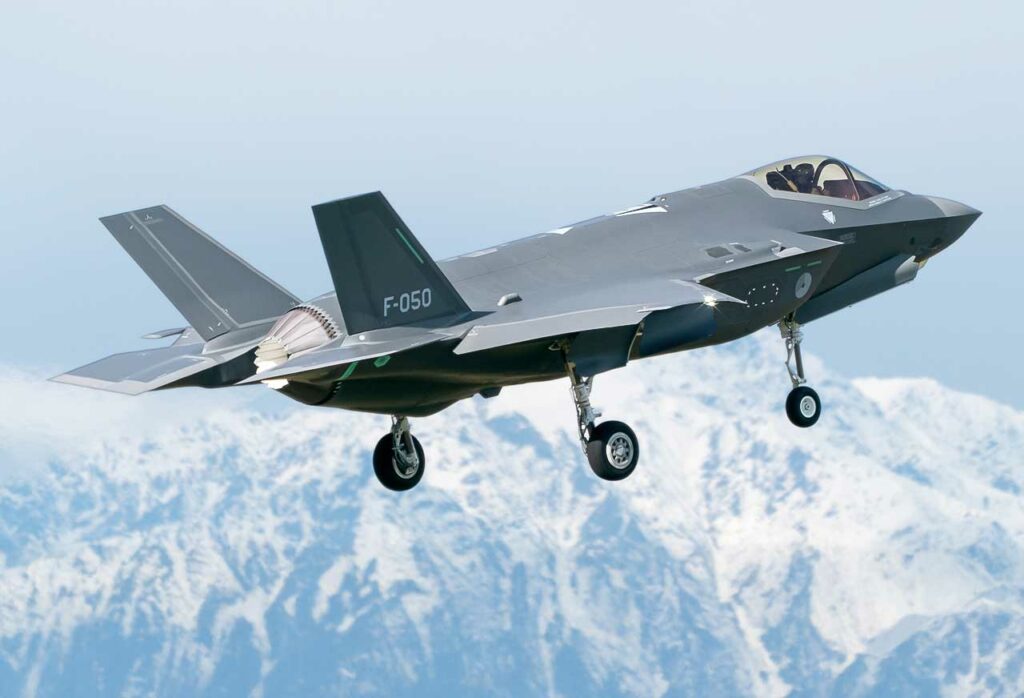
The price of a fighter jet is established at the time of purchase. Its associated dependency is paid over a span of 40 years. Costs, maintenance, upgrades: the true trap of aerial sovereignty.
In Summary
The public debate regarding fighter jets almost always focuses on the purchase contract. This is the visible part. The decisive aspect lies elsewhere: in maintenance, parts, engines, software, infrastructure, stocks, and upgrades. It is here that the total cost of ownership is determined. For the most complex fleets, operational maintenance can ultimately cost several times the initial acquisition price. The example of the F-35 is enlightening: the Pentagon estimates approximately $442 billion for acquisition, compared to $1,580 billion for operating and support over the program’s duration. The trap is twofold. First, there’s a financial aspect: a state can buy a technological showcase that it cannot afford to properly operate. Secondly, there’s a strategic aspect: an underfunded fleet flies less, wears out faster, and ages poorly if updates are delayed. Drones and missiles offer a more “disposable” alternative, but their promise of sovereignty remains partial.
The False Price of a Fighter Jet
Buying a fighter jet is a visible political act. The head of state announces the contract. The industrialist communicates the details. The unit price dominates headlines. However, this price is merely an entry point. The real issue is the ability to maintain the aircraft over thirty or forty years without compromising its availability or tactical relevance.
The French Senate highlights a fundamental point: operational maintenance, or MCO, accounts for an average of 45% to 60% of the total cost of ownership throughout the entire life cycle of equipment, from acquisition to decommissioning. This average varies depending on fleets, usage intensity, age of the fleet, and system sophistication. But the message is clear: maintenance is not a secondary cost. It is a central component of the economic model of air power.
In the most complex programs, the imbalance becomes striking. The GAO, the U.S. Congressional auditing body, estimates that the F-35 program will cost over $2 trillion over its lifespan. Of this total, about $442 billion relates to acquisition, while $1,580 billion pertains to support and operations. In other words, in this specific case, maintenance and support amount to approximately 3.6 times the acquisition cost. The angle “buying is easy, maintaining is ruinous” is not just a saying—it is a financial reality for some systems.
The Purchase Budget and What It Doesn’t Reveal
The purchase budget primarily covers development, industrialization, production, delivery, sometimes the initial armament, the first supply of parts, and some training. It represents the contract cost and the commissioning process. It gives the illusion of control because it is finite, negotiated, voted on, and politically presentable.
However, it does not reveal everything. It does not indicate how much fuel will cost over the years, the expenses for heavy repairs, the replacement of subcomponents, the testing benches, the restoration of engines, the additional stocks in case of crisis, the electronic obsolescence, or the software upgrades necessitated by evolving threats. It also fails to account for the costs associated with dependence on the manufacturer if the latter retains control over technical data, logistics chains, or major depots.
This encapsulates the political problem of modern combat aviation: the purchase contract is easy to announce because it is a one-time signature. The dependency, however, incurs annual costs. It becomes more evident when finances tighten, when parts become scarce, or when a geopolitical crisis deteriorates access to suppliers. This is not just a budgetary issue; it is a question of logistical sovereignty.
The Maintenance Budget and What It Truly Finances
The maintenance budget is broader than many assume. The GAO report on tactical aircraft reminds us that the operating and support credits cover, among other things, fuel, spare parts, and depot-level maintenance. For modern aircraft, this also includes work on engines, stock management, component repairs, supporting equipment, specialized tools, and a portion of the technical infrastructure necessary to simply fly the aircraft.
The GAO further highlights that, for the F-35, support includes operational and maintenance personnel, aircraft and parts repair, as well as system modifications. In other words, maintenance is not merely about fixing broken items; it also encompasses what keeps the aircraft operational, safe, updated, and usable.
This is where states often go wrong. They reason as though they are purchasing a conventional durable good. However, a fighter jet is not a passive asset. It is a living, complex system that requires a constant support chain. The French Senate notes that the average cost of aeronautical MCO has increased by 24.2% between 2014 and 2023. This is not an anomaly; it is the logical consequence of growing sophistication, reliance on highly skilled personnel, advanced maintenance tools, and the rapid obsolescence of certain technological components.
Even when an aircraft is high-performing, operational costs remain high. The same Senate report cites an estimated cost of €25,000 per flying hour for the Rafale, compared to €17,000 for the Mirage 2000. This does not imply that the Rafale is “too expensive.” Rather, it indicates that a more modern, versatile, and technologically dense aircraft requires more costly support. More capabilities also translate to a higher bill.
The Operational Trap of Under-Investment
The danger is not merely about high costs. The real risk lies in paying a lot and receiving less than anticipated. This is the essence of the operational trap. A fleet may be acquired at a high price but can experience a decline in real availability if support does not keep pace.
The F-35 case is particularly instructive here. The GAO notes that the overall availability of the fleet has deteriorated over the past five years and that no variant meets its availability goals. It adds that mission-capable rates have not reached their objectives between 2019 and 2023, despite projected cost increases. The message is harsh: spending more does not automatically guarantee an improved operational readiness level.
Why? Because a modern fleet can be hindered by repair delays, parts shortages, delayed depot maintenance, or an overly dependent contractual architecture. The GAO explicitly mentions slow repair times, a growing backlog of components to be repaired, shortages of parts, insufficient technical documentation, and high reliance on contractors. This results in a straightforward effect: the aircraft exists, but it spends too much time grounded.
Under-investing in maintenance then creates a downward spiral. The available aircraft fly more. They wear out faster. Heavy repairs accumulate. Training flight hours may be condensed to control costs. Pilots lose their rhythm. The military may showcase a fleet on paper, but the actual capability is narrower. The initial ROI deteriorates because the number of purchased aircraft no longer reflects the actual power that can be projected.
The Cost of Upgrades and Obsolescence
A modern fighter jet is not a static entity. It ages more rapidly due to its software and sensors than due to its physical structure. This is why upgrades are not a luxury; they are a tactical survival necessity.
The GAO reminds us that, in the case of the F-35, the 2023 estimate already includes the modernization effort of Block 4, estimated at $16.5 billion, along with engine modernization. This program aims to update materials and software to meet threats that emerged after the initial needs were defined. In simple terms: without modernization, the aircraft falls behind the threat curve.
Delays in upgrades have immediate effects. According to the GAO, the TR-3 capability, which is supposed to activate part of the Block 4 functions, will not begin to be delivered until 2026, incurring approximately three years of delay. The report also explains that some aircraft have been temporarily accepted in a non-combat-capable configuration to avoid them being stored with the manufacturer. In clear terms, some jets are delivered but are not yet fully combat-ready. This is a perfect example of a purchase that does not immediately yield its true military value.
If a country does not invest adequately in these upgrades, it does not simply retain an older standard. It accepts a loss of tactical reach: less relevant sensors, delayed integration of munitions, less efficient data processing, inadequate thermal management, and sometimes progressive incompatibility with the rest of the combat architecture. A fighter jet may still fly; however, it may no longer be aligned with the combat level required of it in the future.
The Temptation of Drones and Missiles
This is where the argument for drones and missiles gains traction. Their promise is straightforward: a disposable sovereignty. They are cheaper per unit, more quickly replaceable, and they eliminate the enormous support apparatus of a traditional fighter aviation: large bases, lengthy pilot training cycles, complex industrial back-ends, and retrofitting challenges across an entire fleet.
Ukraine demonstrates this well. In 2025, Kyiv announced its intention to purchase around 4.5 million FPV drones, three times the number from the previous year, with over $2.6 billion allocated, confirming that 96% of the FPV drones acquired in 2024 came from Ukrainian manufacturers. This model does not eliminate industrial dependencies but reduces reliance on heavy combat aviation and its lengthy support chains. It also facilitates quicker conversion of money into operational mass.
However, one must remain realistic. Drones and missiles are not magically sovereign. They too rely on components, electronics, munitions, data links, sensors, and sometimes critical imports. Missiles necessitate storage, control, recertification, and lifecycle management. Drones require continuous production, software adaptation, and protection against jamming. They do not eliminate logistics; they merely shift logistics toward shorter, more numerous, and more consumable chains.
Their advantage lies elsewhere: they avoid the trap of the lengthy support debt associated with a high-end piloted fleet. They are not expected to maintain their peak status for forty years. Instead, they are meant to be produced quickly, used rapidly, and replaced swiftly. This is a volume logic. The fighter jet, on the other hand, remains a capital logic.
The Real Measure of Return on Investment
The true return on investment for a fighter jet is not assessed at the time of signing. It is measured on three aspects: how many aircraft remain available over time, how many useful flight hours they generate, and how much it costs to modernize them to keep them credible.
If a state purchases a high-end aircraft but lacks the budget for support, the necessary stock of parts, access to technical data, or the capacity for upgrades, it does not secure a sustainable capability. Instead, it acquires a dependency. Conversely, a nation that opts for a more modest fleet, better supported, or combines a core of fighters with drones and missiles, may achieve a less impressive showcase capacity but a more robust long-term capability.
Therefore, the hidden trap of fighter jets is not merely their price. It is the confusion between ownership and power. Owning a fleet does not equate to mastering it. True sovereignty does not begin when the aircraft is delivered. It begins when a nation can fly it, repair it, upgrade it, and regenerate it without relying on an external decision at each step. This is where the line is drawn between a credible air force and one dependent on external support.