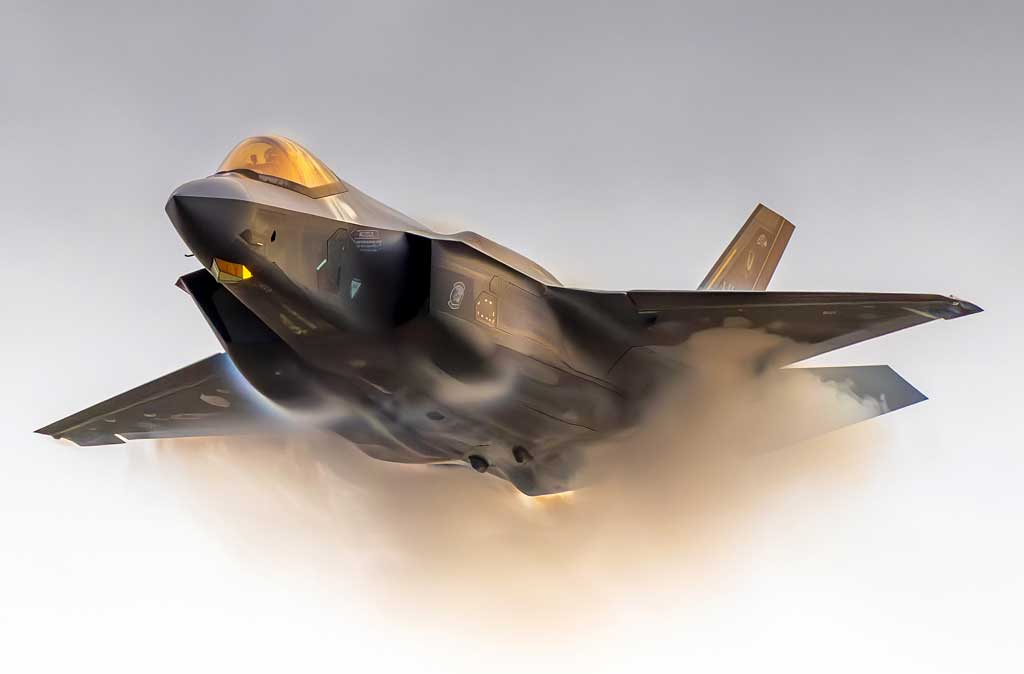
Cold Lake is gearing up to welcome its first F-35A in 2028, while pilots will begin training in the United States as early as 2026. The real bottleneck remains human resources.
In Summary
Canada is finally entering the concrete phase of its transition to the F-35A. Infrastructure is progressing in Cold Lake and Bagotville, with the first aircraft scheduled for delivery to the United States for training in 2026 and 2027, followed by the arrival of the first jets in Canada in 2028. Ottawa has confirmed a timeline aiming for initial operational capability by 2029 and full capability by 2033. On paper, the program is structured. In reality, it depends on a much less visible factor than hangars, runways, or simulators: personnel. The fill rate for Canadian fighter pilots remains insufficient, hovering around 66% according to reports from early 2026, although more recent official figures suggest an improvement to about 70.5% for fighter pilots. The challenge is therefore no longer merely industrial. It is human. An F-35 without a qualified pilot, without experienced technicians, and without a robust training pipeline remains just an aircraft delivered, not a military capability that is genuinely available.
The Program Transitioning from Purchase to Actual Service
The Future Fighter Capability Project is no longer just a procurement file. Canada has already initiated the shift to a fleet of 88 F-35A jets intended to replace the CF-18. The overarching framework has been known since the announcement in 2023, but the period from 2026 to 2028 marks a transformation in the project’s nature. We are no longer only talking about contracts but about receiving aircraft, training, security, maintenance, and operational bases.
The Canadian government states that the first eight jets are set to be delivered between 2026 and 2027 for training at Luke Air Force Base in Arizona. The anticipated arrival of the first aircraft in Canada is scheduled for 2028, in Cold Lake, with an initial operational capability slated for 2029 and full capability in 2033. This timeline has been reiterated in several official documents, including project pages from National Defence, the Auditor General’s report, and parliamentary documents from 2025 and 2026.
This point is crucial, as many modern fighter programs fail not at the time of purchase, but during the absorption phase. Receiving a 5th generation aircraft requires much more than just a parking space and a squadron. It necessitates a hardened base, secured maintenance facilities, specific computer systems, tightly restricted access areas, parts logistics, simulators, and training tailored to American and NATO procedures. The F-35 imposes a much heavier support infrastructure than older aircraft.
The Cold Lake Project as a Physical Test of the Program
The case of Cold Lake encapsulates the challenge. Canada has confirmed the construction of new facilities to host the future fighter, with infrastructure contracts awarded for Cold Lake and Bagotville. Defence Construction Canada discusses two large super hangar complexes, including operational headquarters, maintenance, security, IT, and training facilities. The total value of construction contracts announced for both sites amounts to 525 million Canadian dollars.
The project is not limited to major buildings. Official documents also refer to more sensitive components, such as Tactical Special Access Program Facilities, secure enclosures essential for handling classified information and systems related to the F-35. A contract for 15.8 million Canadian dollars was awarded in January 2025 for these enclosures, with deliveries scheduled between September 2026 and May 2027 in Cold Lake to facilitate the arrival of the first F-35A in Canada in 2028.
In other words, Canada is not merely building hangars. It is constructing the security and support environment for an aircraft whose military value heavily relies on data processing, software, and specialized maintenance. This is a point often overlooked in public debates. The F-35 is not just an aircraft. It is a connected, demanding, and costly weapon system to support. A base that is not ready in time would mechanically delay operational conversion.
Cold Lake plays a pivotal role. On one hand, it is necessary to maintain the CF-18s during the transition. On the other, infrastructure must be prepared for the new fleet. This overlap complicates everything: human resources, security, maintenance, runway organization, and command chains. Transitioning is never clean. It inevitably creates a period where the old fleet incurs costs while the new one has yet to deliver its full effects.
Training in the United States as a Bridge Before Arrival in Canada
The Canadian timeline relies on a logical sequence. The first aircraft will initially go to Luke AFB to train the first pilots and personnel. Canadian Ministry documents indicate that the country should receive its first CF-35A at Luke starting in 2026, with Canadian pilot training commencing there. This method is typical for new F-35 users, helping to integrate into the American training ecosystem before a complete national ramp-up.
This choice has several advantages. It provides access to an already streamlined training pipeline. It reduces the startup risk. It also allows Canada to produce its first cadre of conversion before all national infrastructures are in place. However, it comes with a downside: it renders Ottawa dependent on its ability to identify available pilots early enough who are medically fit, fluent in English at the required level, and released by existing units.
This is where the recruitment debate becomes more than just a secondary issue. Training pilots in the United States is beneficial, but there must be pilots to send. Furthermore, once they return, they should be able to train, mentor, and ramp up the national fleet.
The Recruitment Challenge Threatening More Than Construction
The true bottleneck in the Canadian file is not currently concrete. It lies in flight and support personnel.
The figure highlighted by the Canadian press in early 2026 was a 66% fill rate for fighter pilots. Other official data submitted to Parliament indicated, in the fall of 2025, an improvement to 70.5% for the needs-based staffing of fighter pilots. These two figures may not contradict one another completely, as they could refer to different dates, scopes, or counting methods. However, the conclusion remains the same: Canada is still far from a comfortable situation.
To be blunt, an air force can purchase aircraft faster than it can generate experienced pilots. This is a harsh reality. Training an operational fighter pilot takes years. Training an instructor takes even longer. Therefore, the problem is not as quantitative as it seems. It is not enough to simply boost recruitment. Retaining those mid-level and senior pilots, who transmit experience, guide conversions, and manage squadrons, is crucial.
Several factors contribute to this tension. First, military aviation competes with the civilian sector for qualified profiles. Second, the training is long, costly, and selective. Finally, military life entails geographical mobility, family constraints, and an operational pace that is difficult to maintain over time. Canada has also acknowledged more broadly its retention difficulties in various critical occupations, and its assessments highlight that certain roles enter the red zone as soon as they experience more than 10% staffing shortages. Technical and specialized positions are particularly vulnerable.
In the case of fighter pilots, the risk is even higher, as replacement is not quick. A shortfall in staffing today reverberates several years later. It creates a long-term deficit.
A Phenomenon that Extends Beyond Canada
Canada is not an isolated case. The lack of pilots and instructors affects several Western air forces.
In the United States, this issue is longstanding and structural. Analyses reported in early 2025 noted that the US Air Force was still facing over 1,100 pilot vacancies for fighter pilots in 2024, amidst a broader military pilot shortage. Simultaneously, the Air Education and Training Command announced plans to produce 1,500 pilots annually starting in 2026, specifically to ramp up training throughput. This clearly illustrates that even the world’s foremost military aviation service sees this issue as critical.
In the United Kingdom, the problem exists as well, but it primarily manifests through training crises. The Strategic Defence Review 2025 emphasized that the current fast jet training was deemed inadequate, to the point that British pilots are sent abroad for training. This is significant. When an air force must outsource part of its advanced training due to insufficient capacity domestically, it indicates that the constraint is serious.
A comparison is useful. It shows that Canada is not suffering from a unique or shameful weakness. It is experiencing a tension common to air forces modernizing their fleets with more complex aircraft, while their human resource pools remain limited. The problem is therefore not solely about recruiting more personnel. It is about recruiting early enough, training better, and retaining talent longer.
Concrete Consequences for Air Forces
The shortage of pilots has very real military effects.
The first effect is the underutilization of delivered aircraft. An air force can have jets available but not enough crews to fly them at the desired frequency. This affects operational availability and collective training.
The second effect is the fragility of conversion. Transitioning from an older aircraft to an F-35 requires a steep skills ramp-up. If the initial core of pilots is too small, knowledge transfer takes longer. The aircraft may be present, but the fleet takes longer to mature.
The third effect is the burnout of existing personnel. When an air force lacks personnel, those who remain fly more, teach more, take on more responsibilities, and may leave more quickly. This creates a classic vicious cycle. The shortage feeds on itself.
The fourth effect directly impacts strategy. A combat aviation force is not just based on the number of aircraft purchased but on the number of sorties generated, crew depth, robustness of training, and sustainability over time. A fleet of F-35s with too few pilots won’t deliver the expected military effect, especially for a country like Canada that must cover a vast area, meet NORAD commitments, and contribute to NATO.
The Canadian Challenge Now Less Industrial than Systemic
Canada has thus taken an important step. Infrastructure is progressing. The delivery schedule exists. Initial training in the United States is planned. The project is not stalled.
But the core of the issue has changed. The success of the Future Fighter Capability Project depends less today on the act of purchase and more on the ability of the Royal Canadian Air Force to transform this purchase into actual power. This requires a rare alignment: readiness of infrastructure, availability of pilots, sufficient instructors, trained technicians, enhanced security, mastered software, and a stable support chain.
The topic is broader than a mere temporary shortage. It touches on the capacity of Western democracies to absorb increasingly complex combat systems even as their human resources stretch thin. Canada exemplifies this paradox almost perfectly. It can fund the fighter. It can build the base. It can sign contracts. But it still needs to fill the cockpit and everything that enables the cockpit to have utility.
This is likely where the true success of the Canadian F-35 program will be determined. It will not be on the day the first aircraft lands in Cold Lake, but on the day the Canadian aviation force has enough pilots, enough technicians, and adequate depth to utilize this fleet at the pace required by North America and allied commitments. A 5th generation aircraft changes the silhouette of an air force. Only the personnel change its substance.