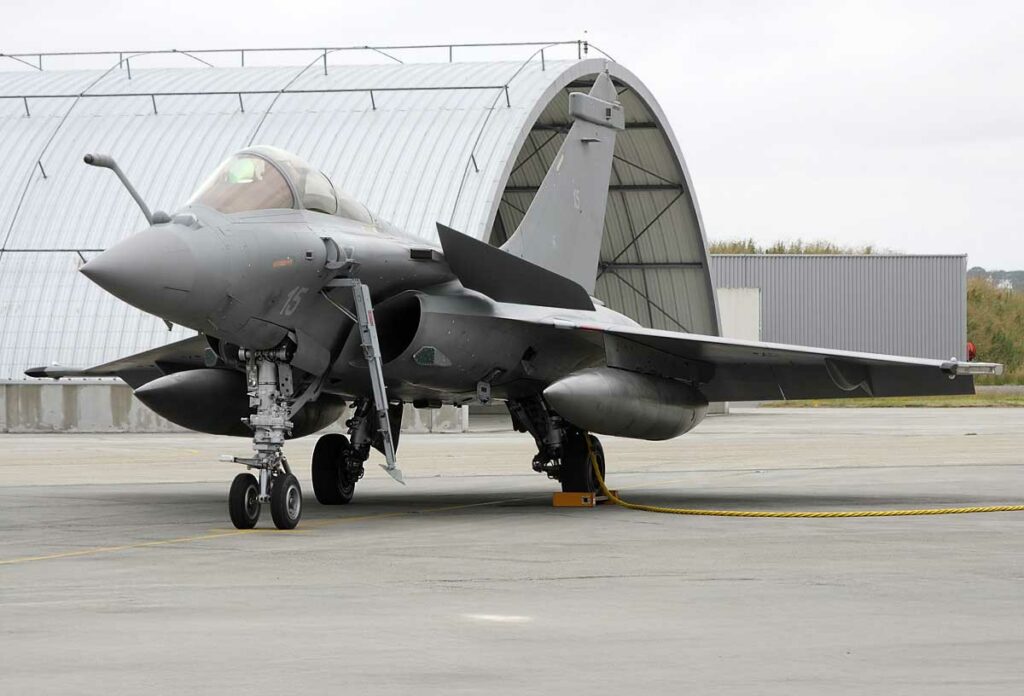
The Rafale F5 will not simply be another standard: it is set to become a network node, pilot combat drones, and carry the ASN4G missile.
In Summary
The Rafale F5 represents a significant shift in purpose. Until now, the Rafale has been a comprehensive multirole combat aircraft. With the F5 standard anticipated around 2030, it is expected to transform into something more: a collaborative combat platform capable of coordinating an environment of sensors, weapons, and drones, all while remaining central to France’s nuclear deterrence strategy with the future ASN4G missile, projected for around 2035. This marks a doctrinal and industrial shift. France aims not only to modernize an aircraft but also to maintain strategic autonomy at a time when the SCAF program is stagnating, tensions with Airbus escalate, and Europe is abruptly rediscovering the costs of military dependency. In this context, Dassault Aviation is advancing with a straightforward logic: sustain the present with the Rafale, prepare for the future with the F5, and establish itself as the key architect of a potential European combat system.
The Rafale’s Evolving Role in Aerial Warfare
The Rafale F5 is not a minor update. It represents a generational leap within an already operational aircraft. The French bet is clear: rather than waiting for a future system mired in political challenges, it is essential to enhance an existing, well-understood, exported, and supported platform.
The Rafale, in its previous iterations, has already demonstrated its versatility. It conducts air superiority missions, ground strikes, reconnaissance, electronic warfare, and buddy-buddy refueling in its naval version, and it participates in the airborne component of deterrence. This “omni-role” logic remains intact. However, the F5 introduces a new dimension: the Rafale becomes a flying tactical decision center.
The Ministry of Armed Forces and Dassault convey the same message, each in their own words: the F5 is designed to manage a collaborative combat bubble. In other terms, the pilot no longer merely flies the aircraft and fires weapons; they will have to oversee remote effectors, receive and integrate more data, make quicker decisions, and lead distributed action. The stakes extend beyond firepower. It is about the ability to survive and make decisions in a space saturated with sensors, jamming, long-range missiles, and drones.
This shift also responds to a harsh reality: in contemporary conflicts, isolated aircraft become more vulnerable. Value is shifting toward networks, data fusion, deception, countermeasures, and distributed mass. The Rafale F5 is designed for this type of warfare, not for replaying 1990s air campaigns.
The Combat Drone That Will Accompany the Rafale F5
The visible heart of this transformation is the combat drone expected to be unveiled in October 2024, complementing the F5 standard. This project builds on the legacy of the nEUROn demonstrator, a European program led by Dassault Aviation. This is strategically significant. Dassault is not starting from scratch; the company is reviving technological capital accumulated over two decades in stealth, unmanned architectures, and collaborative combat.
The future drone is not envisioned as a gadget or merely a communication “loyal wingman.” It is intended to be complementary to the Rafale. The known features align with this goal: stealth, controlled autonomy, human-in-the-loop, internal payload, versatility, and the ability to evolve with threats.
To be clear, discussing “drone swarms” can be misleading. One might envision dozens of inexpensive small devices launched like wandering munitions. This is not exactly the core issue here. The Rafale F5 seems more geared toward coordinating a range of combat drones and connected effectors at varying levels, some of which will be expensive, stealthy, and reusable. The term swarm describes a logic of distributed action, but it does not necessarily imply a cheap cloud.
This distinction is important. In French doctrine, an inhabited aircraft is not replaced by a blind mass of drones. A system is being constructed where the pilot remains the decision-maker, while the drone leads the way, jamming, collecting data, exposing itself to threats, or even striking first. The Rafale thus becomes the conductor of a dispersed aerial combat group.
This approach recreates mass without multiplying crews. It also enables penetration into denser integrated defenses. Against multilayered radars, long-range surface-to-air missiles, and fighters supported by distributed sensors, sending a single aircraft, even an excellent one, no longer carries the same weight as it did before.
The ASN4G Missile Centralizing Nuclear Capabilities
Another key shift with the F5 is its nuclear capability. The future ASN4G missile will succeed the ASMPA-R within France’s airborne component. President Emmanuel Macron confirmed in March 2025 that France is aiming for a hypersonic missile by around 2035. Again, this topic is not merely about a technical replacement; it goes to the heart of the credibility of deterrence.
The logic of the French airborne component is well-known: it must provide a visible, flexible, and recallable capability, distinct politically from the naval component. For this component to remain credible, it must possess a vector capable of penetrating increasingly sophisticated defenses. This is the essence of the ASN4G missile.
Available public details indicate that the hypersonic missile will be carried by the Rafale F5, developed with significant involvement from MBDA and ONERA. ONERA highlights the anticipated gains due to hypersonic speed: increased range, higher flight altitude, more challenging interception, and enhanced maneuverability. The organization also notes that its testing facilities cover domains up to approximately Mach 7.5 for certain platforms and beyond Mach 10 in some wind tunnels. While this does not confirm the final performance of the missile, it demonstrates the level of the technological challenge being tackled.
Politically, the message is clear: France wants its airborne component to remain penetrating between 2035 and 2060. And it aims to do this with a national vector, carried by a national aircraft. The Rafale F5 + ASN4G combination thus becomes a marker of strategic autonomy.
The decision to transform Luxeuil into a major nuclear facility aligns with this vision. In March 2025, Emmanuel Macron announced an investment of around 1.5 billion euros to modernize the base, which will eventually host the Rafale F5 and its ASN4G missiles. This is not merely an infrastructure detail; it is a strategic posture decision.
Dassault Securing the Present to Impact the Future
Dassault Aviation is engaged in a considerably larger game than merely selling an additional standard. The company is striving to demonstrate three key points.
First, that it can deliver. In 2025, Dassault delivered 26 Rafale aircraft, up from 21 the previous year, and expects 28 deliveries in 2026. Its order book reached 46.6 billion euros by the end of 2025, with 220 Rafale in backlog. In a Europe discussing rearmament yet struggling with industrial delays, this production capacity holds almost as much value as the technology itself.
Second, that it can architect a complete system. Dassault’s discourse on nEUROn is not nostalgic; it serves to reiterate a consistent thesis: European cooperation works when there is a clear architect, defined responsibilities, a maintained timeline, and an identified engineering authority. In other words, Dassault advocates for a Europe of guided cooperation, not a Europe of industrial dilution.
Finally, that it can provide a credible sovereign solution if the SCAF becomes mired. This is where the Rafale F5 takes on its political significance. As the F5 becomes more powerful, connected, nuclear-capable, and suited for collaborative combat, it strengthens France’s strategic assurance. This assurance reduces reliance on a future program that remains contentious.
The SCAF Revealing the Real Conflict Between Paris and Berlin
The debate surrounding the SCAF is often framed as a dispute among industrialists, which is overly simplistic. The conflict encompasses industrial, doctrinal, and political dimensions.
Launched in 2017, the program aims for a next-generation air combat system among France, Germany, and Spain. On paper, the concept is logical: pooling costs, building a European standard, integrating manned aircraft, drones, and combat cloud capabilities. In reality, however, the program remains plagued by governance issues, burden-sharing, intellectual property concerns, and the central question of leadership.
Éric Trappier further intensified rhetoric in early March 2026, stating that the project would be “dead” if Airbus refused to cooperate under a clear responsibility framework. This blunt statement conveys the reality of the situation: Dassault rejects a multi-headed leadership approach for the combat aircraft itself. The company demands a genuine, not symbolic, prime contractor role.
Why such a hardline stance? Because, from the French perspective, the NGF of the SCAF cannot be a bureaucratic compromise. France seeks a naval aircraft, potentially linked to nuclear missions, designed with an expeditionary and autonomous employment tradition. Germany does not share the same view on deterrence, the need for embedded capabilities, or the culture of sovereignty regarding combat aircraft. These divergences are not mere details; they shape the requirements.
The crux of the matter is straightforward: Paris wants a warplane governed by a single architect. Berlin seeks a more shared governance structure, aligning with its industrial and political culture. Between them, Airbus defends its position while Dassault asserts its standing, leading to a drifting timeline.
The Rafale F5 Becoming France’s Argument in European Defense
In this power struggle, the Rafale F5 is not merely a stopgap solution; it is a symbol of strength. France essentially states: we continue to work on the European future, but we retain a sufficiently robust national tool to avoid suffering from delays, weak compromises, or concessions.
Additionally, it positions Dassault as the main French actor in an expanded European framework. The message to partners is clear: France arrives not empty-handed; it brings a mature, export-capable, nuclear-fitted combat aircraft capable of evolving beyond 2060, soon connected to a combat drone, and integrated into a broader collaborative combat vision.
This posture may irritate some partners; nevertheless, it is coherent. Historically, large European programs rarely succeed when no one accepts that a single industrial partner should carry the overall architecture. Dassault aims to translate the operational success of the Rafale into political legitimacy for the future system.
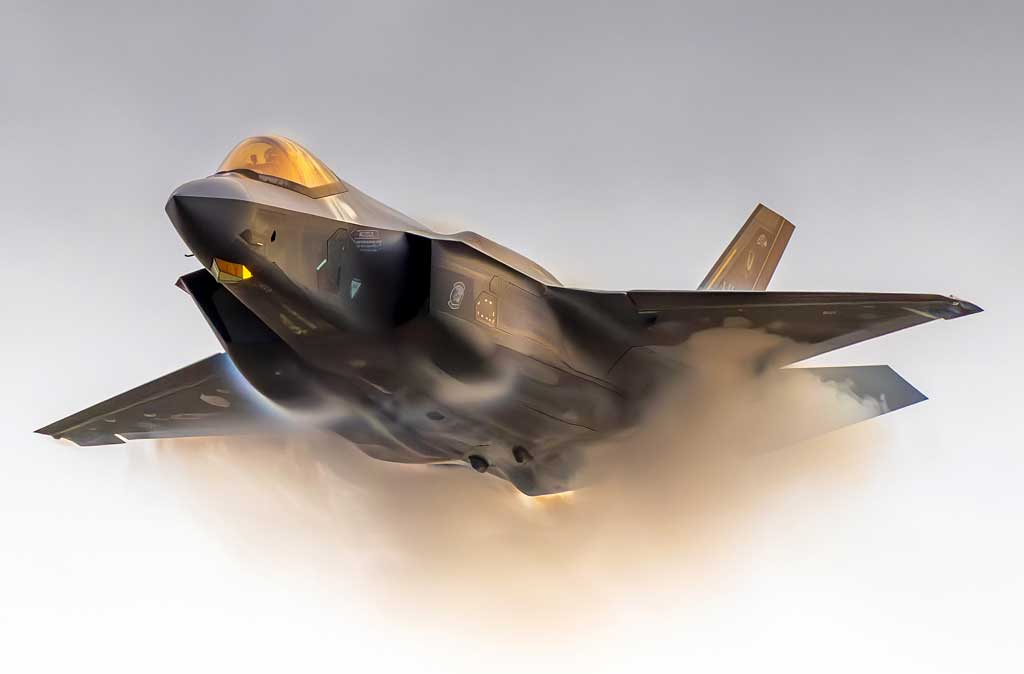
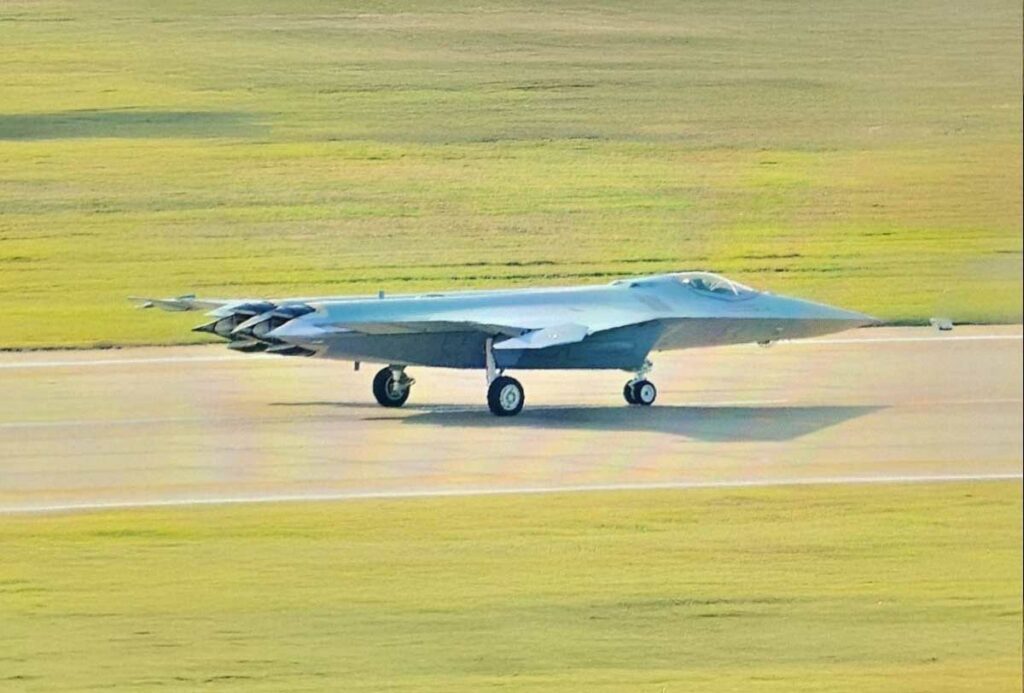
The stakes are high. If the SCAF truly falters, the landscape of European air defense may become more fragmented than ever, with a mix of Rafale F5s, upgraded Eurofighters, American F-35s, and the UK, Italy, and Japan-led GCAP program. However, from the French perspective, the risk of funding a collective program without controlling the central logic is worse.
The French Choice Blending Autonomy, Credibility, and Power Dynamics
The Rafale F5 ultimately reveals a truth that many European capitals are rediscovering too late: military sovereignty cannot simply be asserted through rhetoric. It is built through industrial chains, doctrinal choices, and occasionally tough political compromises.
With the F5, France updates its reference combat aircraft to become a network node, a carrier for the future nuclear missile ASN4G, and a tactical command post capable of integrating combat drones. In parallel, it strengthens Dassault’s position within the European power dynamics.
The signal sent is twofold. To the outside, it conveys that France wants to remain a complete aerial power, including in the nuclear domain. To its partners, it indicates that European defense will not be created against the backdrop of existing competencies and responsibilities.
The real issue, therefore, is not merely whether the Rafale F5 will be more connected, smarter, or stealthier within its ecosystem. The true question is who will, in the future, design the architecture of European aerial combat. On this terrain, Dassault is no longer asking for a seat at the table; it is asserting its position.